


 Webshop
 Flat roof windows
 FlatLight Premium
 Rooflights
 SunTubes
 Roof windows
 Window frames and doors
 Sales & Service
 About us
 Brochures
- Customer service
- Terms and conditions
- Online retailers
- Installing a concrete roof opening and flat roof window
- Privacy Policy Intura Limited
- Your legal guarantee rights
- Disclaimer
PVC roof windows for pitched roofs
PVC roof windows for pitched roofs
More daylight. More comfort.
High-quality PVC roof windows for renovation and new-build projects. Choose from standard centre-pivot and top-hung roof windows or the compact Intura Vista with integrated flashing. Available with HR++ double glazing, HR+++ triple glazing or solar-control glazing.
For contractors, roofers, dealers and homeowners.
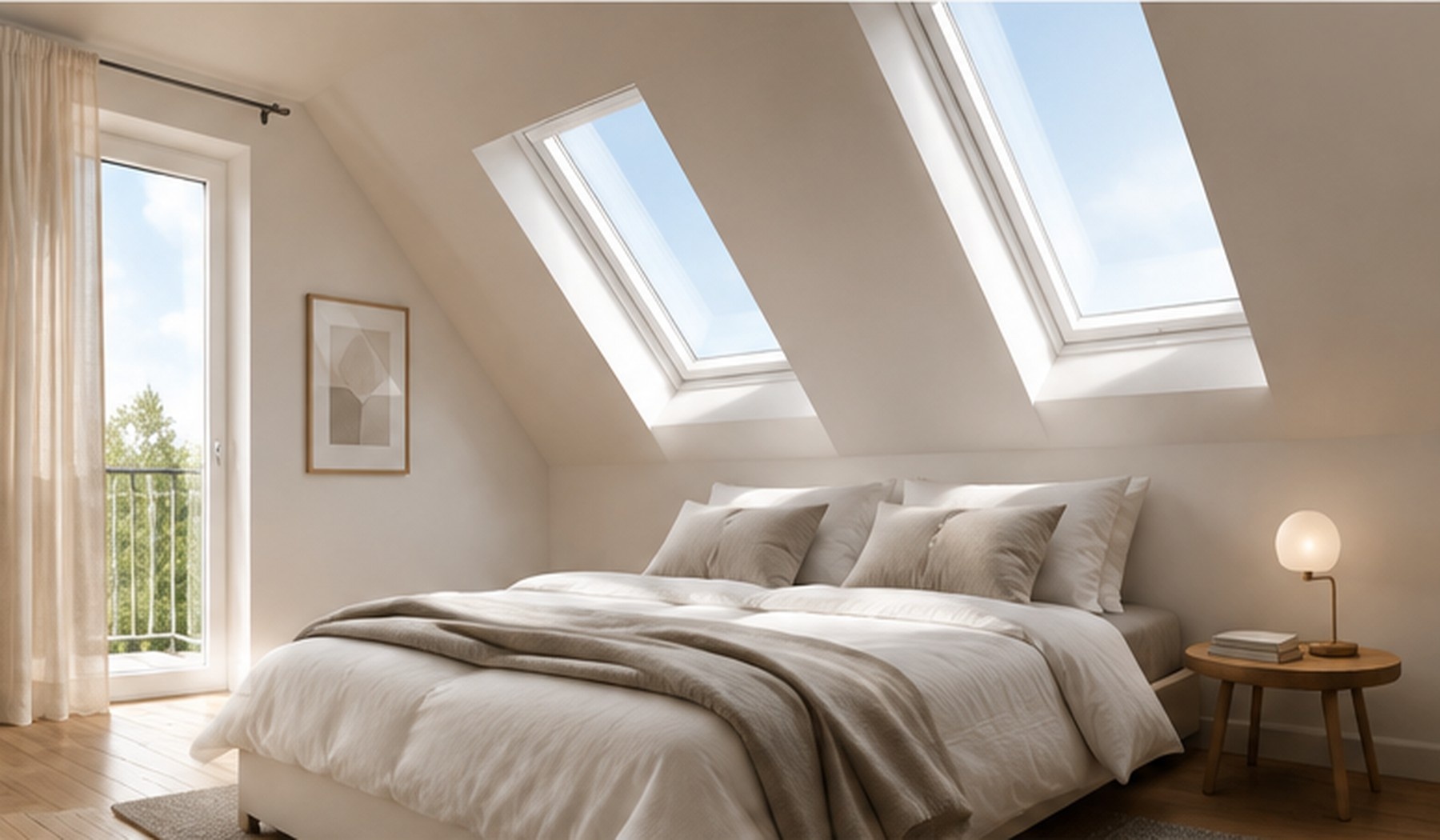
Find the right solution quickly
Which PVC roof window suits your project?
The best choice depends on the room, the preferred opening method, the insulation level, the roof’s orientation and the existing dimensions. Start with your situation, then select the glazing and the appropriate flashing.
Small roof window: Intura Vista
A compact top-hung roof window in 50 × 62 or 55 × 78 cm, supplied complete with integrated flashing. Ideal for smaller roofs, attics, bathrooms and renovation projects.
Discover Intura VistaHigh insulation and comfort
For a heated attic or new-build home, HR+++ triple glazing is usually the logical starting point. Match the dimensions and position to the room and the desired view.
View triple-glazed roof windowsMoisture-resistant PVC
The white PVC profile does not absorb moisture, never needs painting and is easy to clean. Effective room ventilation remains essential.
Read the bathroom adviceCheck the technical details quickly
Check the external dimensions, structural opening, roof pitch, roofing material, flashing and glazing before ordering. Intura can assist with product configuration and documentation.
Go to project informationCompare opening methods
Standard roof window or compact Intura Vista?
Centre-pivot roof window
A centre-pivot roof window rotates around a horizontal central axis. It is versatile, easy to operate and can be rotated to clean the outside pane from indoors. Part of the sash moves into the room when the window is opened.
Choose this for:standard bedrooms, attics, bathrooms and projects where practical operation and price are important.
View centre-pivot roof windowsTop-hung roof window
A top-hung roof window is hinged at the top and opens outwards. This keeps the space beneath the open window clear and provides an unobstructed view. Intura top-hung models are supported by gas springs when opened.
Choose this for:a low installation position, a clear view or when you want to stand close beneath the open roof window.
View top-hung roof windowsIntura Vista
The Intura Vista is a compact PVC top-hung roof window with integrated flashing. Its complete installation unit, popular small dimensions and straightforward fitting make it a favourite for renovation projects.
Choose this for:small attics, bathrooms, landings, outbuildings and renovations where roof space is limited.
View Intura Vista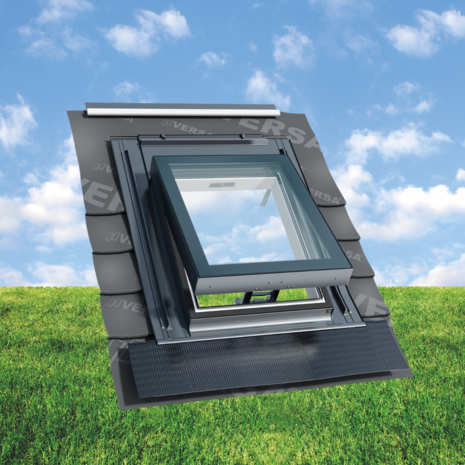
A renovation favourite
Intura Vista: a small roof window, supplied complete.
The Intura Vista was developed for projects that need a compact, well-insulated roof window that is quick to install. It opens outwards and is supplied with integrated flashing and a weatherproof membrane. The flashing does not have to be selected separately, reducing the risk of ordering an incompatible product combination.
The two compact external dimensions suit many common renovation situations. The 50 × 62 cm version is often called a four-tile roof window, while the 55 × 78 cm version is commonly known as a six-tile roof window. They are widely used in small attic rooms, bathrooms, landings, garages, sheds and other spaces where a standard roof window is too large.
- Low-maintenance white PVC
- Integrated flashing
- 50 × 62 and 55 × 78 cm
- HR++ or HR+++ triple glazing, depending on the version
- Top-hung opening with three ventilation positions
- Suitable for renovation and new build
Intura ranges
Compare the main PVC roof windows
The models below cover the most common situations. Always check the current dimensions, technical values, permitted roof pitch, stock and price on the product page.
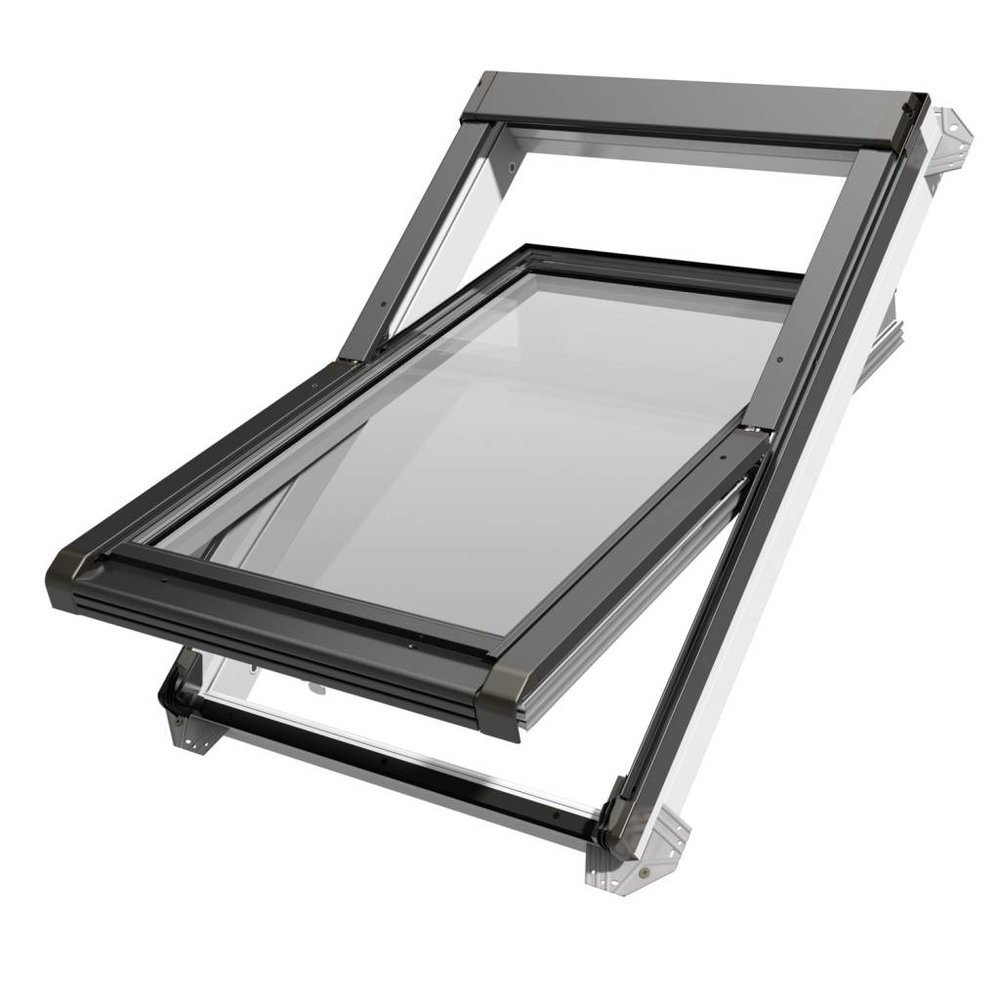
IGOV N22
PVC centre-pivot roof window with HR+++ triple glazing, integrated adjustable ventilation and a handle with a micro-ventilation position.
- Uw-value approximately 0.86 W/m²K
- For heated living spaces
- Many familiar standard dimensions
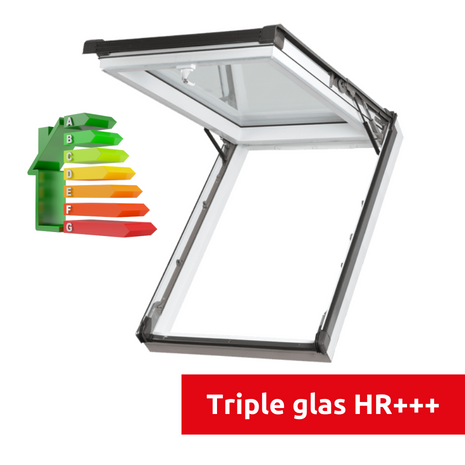
IGKV N22
A triple-glazed roof window hinged at the top. It opens outwards, is supported by gas springs and can also be tilted for cleaning.
- Uw-value approximately 0.86 W/m²K
- Clear space beneath the window
- Integrated ventilation

VGOV E2
A low-maintenance PVC centre-pivot roof window with HR++ double glazing. An accessible solution for standard renovations and situations that do not require the highest insulation level.
- Uw-value approximately 1.2 W/m²K
- HR++ double glazing
- Versatile renovation solution
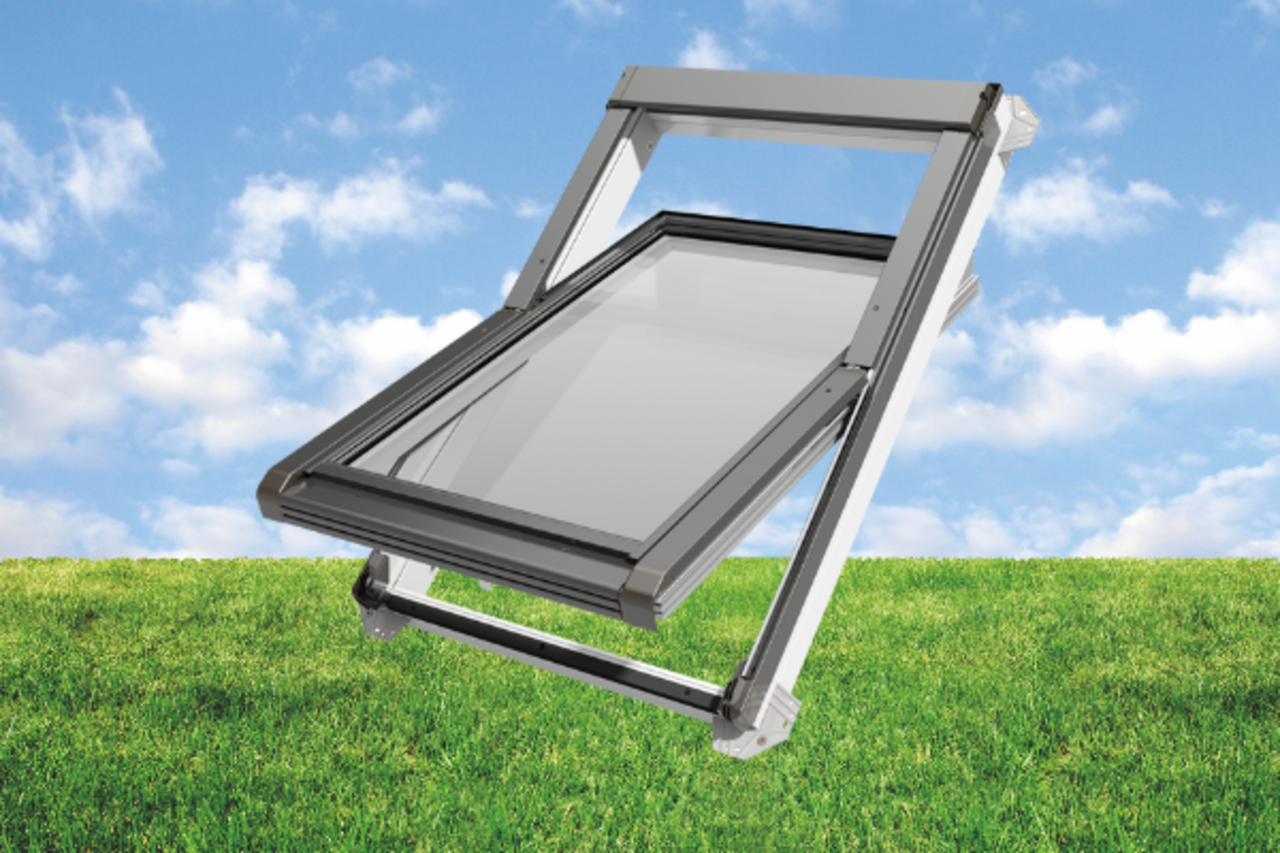
IGOV / IGKV N21
Centre-pivot and top-hung roof windows with solar-control triple glazing. Particularly useful on south- and west-facing roof slopes and in rooms that heat up quickly.
- Solar-control triple glazing
- Centre-pivot or top-hung options
- Less solar heat and glare
Choosing the glazing
HR++ double, HR+++ triple or solar-control glazing?
Winter insulation is not the only consideration. The roof’s orientation, how the room is used and the risk of overheating together determine which glazing provides the greatest comfort.
HR++ double glazing
A sound basis for many standard renovations. HR++ is more affordable than triple glazing and suits rooms where the highest insulation value is not essential.
View HR++HR+++ triple glazing
The preferred option for heated attics, well-insulated homes and new builds. Triple glazing reduces heat loss and improves comfort in cold weather.
View HR+++Solar-control triple glazing
Designed for sunny roof slopes and rooms that heat up quickly in summer. The glazing limits solar heat and intrusive glare, although external solar shading remains the most effective additional measure.
View solar-control glazingDimensions and installation
The right roof window starts before you order.
The product dimensions of a roof window are not automatically the same as the required structural opening. When replacing a window, the brand code and external dimensions are important starting points. In a new build, the construction, desired internal finish and position determine the final opening.
For standard Intura roof windows, order the flashing separately. It creates the watertight connection between the window and the roofing material. It must match both the window dimensions and the type of roof covering, such as tiles, slates or flat roofing material.
Also check the permitted roof pitch for the selected model. The exact range differs by series and may be affected by the flashing and roof construction.
How the room is used
Roof windows for bedrooms, bathrooms and attics
Bedroom
Daylight, ventilation, blackout and summer comfort all matter here. For a heated bedroom, HR+++ triple glazing is generally preferable. Solar-control glazing or external shading is a sensible choice on a sunny roof slope. Combine the window with a blackout blind and ensure that ventilation remains possible at night.
Bathroom
PVC is suitable for humid rooms because the internal profile does not absorb moisture and never needs painting. The roof window does not, however, replace effective room ventilation. Actively extract moisture after showering and prevent prolonged high humidity and condensation on the glass or connections.
Attic and workspace
The position and dimensions determine how much useful daylight enters the room. Several windows spread across the roof often provide more even light than one small window. For a workspace, also consider glare and heat gain; solar-control glazing and adjustable shading improve comfort.
For contractors, roofers and dealers
From project details to a complete specification.
A professional order involves more than the window alone. A complete check covers dimensions, opening method, glazing, roof pitch, roofing material, flashing, accessories and installation conditions. Intura can assist with product selection, project enquiries and technical documentation.
Technical guidance
Practical guidance on PVC roof windows
The information below helps with preparation and checking. Always follow the installation instructions for the specific window and flashing during installation.
Replacing a PVC roof window: where do you start?
Do not start with the visible glass dimensions alone. First locate the type code of the existing roof window, usually shown on a plate or sticker attached to the sash. Record the brand, type and size code, then measure the external dimensions as a check. A recognised size code can help identify a suitable replacement, but the actual situation must still be verified.
Next, inspect the roofing material and existing flashing. A new, matching flashing is normally installed when replacing a roof window. Also check the condition of the roofing membrane, insulation, battens and internal lining. A window with the same nominal dimensions does not automatically mean that the opening or internal finish will require no adjustment.
A PVC roof window is particularly useful when low maintenance and moisture resistance matter. HR+++ triple glazing is generally selected for a heated room, while HR++ may suit a standard renovation. Summer comfort should also be considered on a roof slope with strong sun exposure.
How do you determine the right dimensions and position?
The right dimensions depend on the spacing between structural elements, the desired amount of daylight, the room height and the view. Position the lower edge so that operation and the view remain practical. At the top, consider access to the handle and the internal lining.
Daylight is not determined by the total glass area alone. A higher window brings light deeper into the room, while several windows can distribute light more evenly. The shape of the reveals also makes a difference: a horizontal top reveal and vertical bottom reveal improve light distribution and air circulation across the glazing.
Have any changes to load-bearing rafters or purlins assessed by a structural professional. Always use the dimensions in the installation instructions; the external product dimensions, order dimensions and required structural opening are different measurements.
Which flashing fits the roof window?
The flashing drains rainwater around the roof window and connects the window to the roofing material. Select it according to the window series, window dimensions, roofing material and roof pitch. Flashing for profiled roof tiles is not automatically suitable for slates or flat roofing materials.
When ordering, check that the size codes of the window and flashing match. During installation, follow the specified overlaps and correctly connect the weatherproof membrane to the roofing. The Intura Vista differs from many standard models because its flashing is already integrated.
How can you prevent condensation on a roof window?
Condensation on the inside occurs when warm, humid indoor air meets a cold surface. It does not immediately mean that the roof window is leaking. Limit moisture production, ventilate the room and maintain airflow across the glazing. Bathrooms, bedrooms and newly plastered rooms in particular can temporarily contain a great deal of moisture.
Correct insulation and an airtight connection around the frame prevent thermal bridges and moisture movement into the roof construction. Ideally, position a heat source beneath the roof window and avoid completely blocking the airflow with a deep windowsill or closed curtain. Moisture that remains visible between the panes may indicate a failed insulated glass unit.
What ventilation is still required?
Integrated ventilation in the roof window can supply fresh air while the window is closed. Capacity and operation vary by model. A ventilation position is useful, but it does not always replace the home’s ventilation design or mechanical extraction in a bathroom and kitchen.
Maintain continuous ventilation in accordance with the home’s design and open the window for additional purge ventilation when moisture or heat must be removed quickly. Keep ventilation openings clean and unobstructed. In a bedroom, a combination of background ventilation, an opening window and suitable insect screening is often the most comfortable solution.
How do you maintain a PVC roof window?
The PVC profile does not require painting. Clean it with lukewarm water and a mild, non-abrasive cleaner. Avoid aggressive solvents and abrasive sponges. Keep the external channels and drainage areas free of leaves, moss and dirt.
Periodically check the seals, hinges, operating components and the flashing connection. Follow the model-specific instructions for lubrication and adjustment. A centre-pivot sash can generally be rotated so that the outside pane can be cleaned safely from indoors.
Do you need planning permission for a roof window?
A roof window may be permitted development under certain conditions, but the rules depend on the country and local authority, its position and dimensions, and whether the building has listed or protected status. Different requirements may apply to a roof slope facing a road or other public area.
Check the current national and local planning rules before starting work and ask the relevant authority when in doubt. Prior approval is often required for listed buildings and protected areas. Building requirements for structural safety, insulation and weathertight installation still apply regardless of planning status.
What are common ordering and installation mistakes?
- Measuring only the glass instead of checking the type code and external dimensions.
- Selecting flashing that does not match the window dimensions or roofing material.
- Failing to check the permitted roof pitch for the specific model.
- Insufficient insulation or an inadequate airtight connection around the frame.
- Ignoring solar exposure, blackout requirements or insect screening.
- Changing the opening without assessing the supporting structure.
- Using a roof window as the only ventilation provision in a humid room.
If in doubt, have the complete product configuration checked before ordering. Include dimensions, roof pitch, roofing material and clear photographs of both the inside and outside.
Frequently asked questions
Short answers to common questions
What are the benefits of a PVC roof window?
A PVC roof window is low-maintenance, moisture-resistant and easy to clean. The internal profile does not need painting and is suitable for living spaces, bathrooms and professional buildings.
When should I choose triple glazing?
HR+++ triple glazing is particularly suitable for heated attics, well-insulated homes and new builds. It reduces heat loss more effectively than HR++ double glazing.
Is solar-control glazing the same as external solar shading?
No. Solar-control glazing reduces some of the sun’s heat and glare. External shading intercepts solar radiation before it reaches the glass and is therefore a powerful additional measure against overheating.
Do I always need separate flashing?
For most standard Intura roof windows, yes. The flashing must match the window dimensions, roofing material and roof pitch. The compact Intura Vista is supplied with integrated flashing.
How quickly does Intura deliver?
Many standard dimensions are available from stock and are usually delivered within 2–3 working days. Check current stock and delivery information on the product page.
Ready to choose?
Order online or ask us to check your specification.
When requesting advice, include the desired dimensions, roof pitch, roofing material and several clear photographs.
Need help? Contact us!
Call us
Available Mon–Fri, 9:00 AM–5:30 PM
Ask us anything
Social media
Socials
 Wij scoren een 4.5 op
 Intura B.V.
Ampèrestraat 15
3861 NC
Nijkerk View on Google Maps
BTW nummer: NL854817360B01
KvK nummer: 62436120
Bankrelatie ING Bank: NL47INGB0006764730
